
Behind that menu sits a phone number tied to a call flow. The US IVR market was estimated at $2.39 billion in 2023, a market-size figure rather than an adoption rate, but it shows how much money goes into automated call handling.
Many callers know the "Press 1" routine but not how the number, prompts, caller input, routing rules, and fallback options fit together. This guide follows a call from the first dial to the final outcome.
Key Takeaways
- An IVR number is a phone number attached to an automated menu that takes keypad or spoken input.
- A call flows from dialing to greeting, selection, and routing to a person, voicemail, or information.
- Hours, availability, language, and caller choices decide where a call goes.
- IVR works on local, toll-free, and virtual numbers alike.
What Is an IVR Number?
An IVR number is a business phone number connected to an Interactive Voice Response system. The system plays prompts, collects input from the caller, and then provides information, self-service, or call routing.
The problem it solves
Callers want different departments or answers, and businesses need a consistent way to sort incoming calls, handle routine requests, and send people to the right place.
What it is not
IVR is not a special prefix, and it is not the same as a toll-free number. It describes the automated call flow attached to a number. For example, Twilio's IVR tutorial connects a number to a published flow that decides how incoming calls are handled.
Why phones still matter
Websites, chat, and apps haven't replaced calling. In a 2024 Five9 survey of 4,000 US and UK consumers, 75% preferred talking to a human, in person or by phone, for support. Urgent, complex, and high-trust issues often end up on the phone, and IVR gives those calls a structured front door.
Common IVR types
- Keypad (DTMF): each key press produces two tones the system reads as input.
- Directed dialog: callers say one of a few expected options.
- Natural language: speech recognition interprets free-form requests.
- Hybrid: accepts keypad and speech, often with live-agent routing.
Tossable Digits bundles IVR with forwarding, voicemail, call screening, and recording on virtual numbers.

How Does an IVR Number Work?
An IVR call moves through connected stages. The call reaches the number, the system plays a prompt, the caller responds, the system applies routing rules, and the call ends in a result or a fallback.
Initiation
It starts when someone dials from a mobile phone, landline, or VoIP service. The telephony platform answers and loads the call flow configured for that number.
Several things can shape this step:
- Number type (local, toll-free, or international)
- Network connection
- Business-hour schedules
- Authentication requirements
- On-premises or cloud-based phone system
Cloud IVR is hosted off-site, but that is a deployment difference. The stages of the call stay the same.
Core operation
The system plays a greeting using a recorded voice or text-to-speech. Then it waits for a keypad tone or a spoken answer.
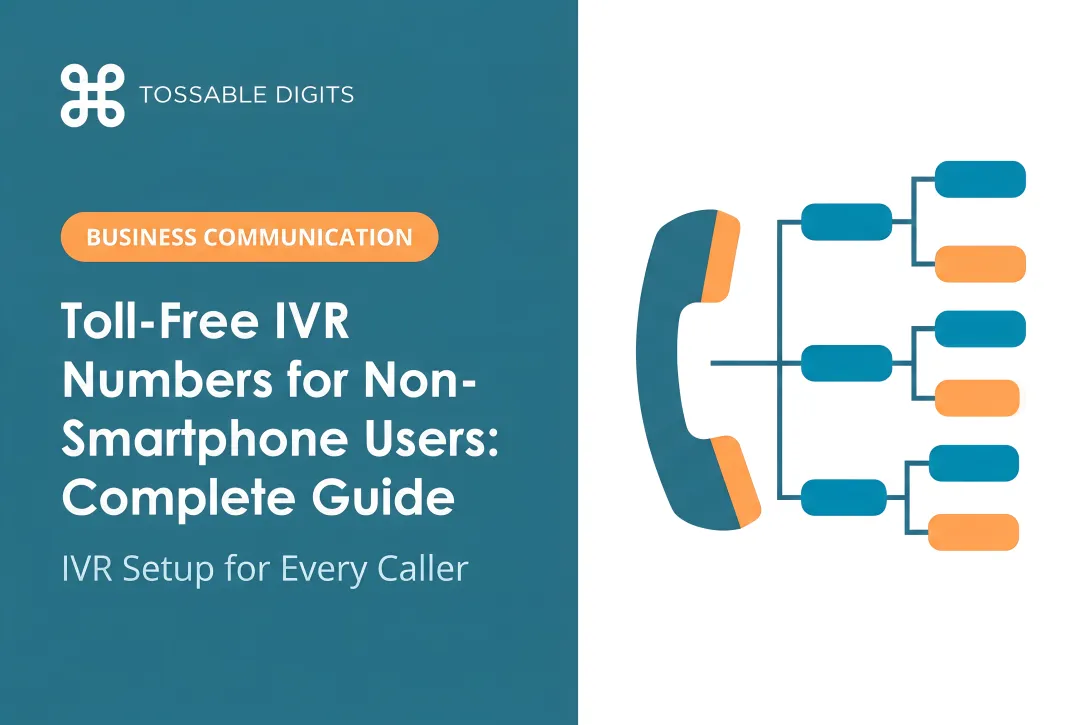
Take a simple menu: "Press 1 for sales, press 2 for support, or stay on the line for assistance." Each valid response maps to a programmed destination. Speech systems work differently under the hood: they interpret recognized words or phrases instead of tones.
Some flows collect more before routing, such as an account number, a language choice, or the reason for calling. That cuts down on transfers and lets simple requests finish in the menu itself.
Routing and control
Routing rules decide what happens after the caller responds. Typical inputs include:
- Agent availability and department queues
- Time of day and holidays
- Caller selection and language
- Priority rules
- Maximum wait or retry limits
Microsoft's auto-attendant settings, for instance, include business-hours and after-hours flows plus holiday schedules with their own call paths.
Fallbacks matter just as much. Invalid input, silence, a full queue, or a request for a representative should trigger a clear next step:
- Repeat the prompt
- Offer voicemail or a callback
- Hand off to a person
Exact behavior varies by provider.
Output and result
A call can end in several ways:
- Automated information
- A completed self-service task
- A department or agent
- A queue
- Voicemail or a callback option
- Forwarding to another number
Done well, this gets people to the right person sooner, spares them repeating themselves, keeps the line useful after hours, and preserves a path to human help.

Where Are IVR Numbers Used?
Common US use cases
Twilio lists routing to the right department, agent escalation, bill payment, appointment scheduling, delivery details, and account updates among typical uses. Most combine self-service with a live-agent option.
- Billing: In one Twilio customer case, Inbox Health cut roughly 800 support calls a month, with 61% of callers paying without live help. That is a vendor-reported, case-specific result.
- Appointments and orders: callers confirm or reschedule and check delivery status.
- Sales and support: menus split inquiries by department.
- After hours: voicemail catches what staff can't answer.
Who benefits
Common users include:
- Small businesses and remote teams
- Real estate professionals and property managers
- Educators and online sellers
- Marketers
- International companies serving US callers
They typically use it to separate departments, campaigns, locations, or work and personal calls.
With Tossable Digits, for example, a number can forward to a cell phone, landline, or any other device. Each virtual number also gets its own voicemail box, and virtual number groups can map to departments.
When IVR pays off
IVR works best in these situations:
- Calls go to multiple destinations
- The same questions recur
- Call volume fluctuates
- Staff are distributed
- Calls must reach mobile phones or other endpoints
Keep menus short. Twilio advises simple, concise menus built around common requests. Genesys' design checklist asks whether menus have four or fewer options. Always leave callers an accessible path to a person or voicemail.

Conclusion
An IVR number works like this: a caller reaches a number, answers an automated prompt, and configured rules send the call to information, self-service, a queue, a person, or a fallback.
Knowing that flow helps you choose the right number and routing settings, write clearer menus, and balance automation, privacy, flexibility, and human support.
Frequently Asked Questions
How do I find an IVR number?
Check the business's website, contact page, account statements, appointment confirmations, or directory listing. It's rarely labeled "IVR"; it's usually just the main phone number.
How do I dial an IVR number?
Dial it like any other number. After the greeting, press the requested key or say the response, and use the repeat, representative, or voicemail option if offered.
What does IVR stand for?
Interactive Voice Response. It's a phone system that interacts with callers through voice prompts, keypad input, speech recognition, or a mix.
What is an IVR number?
It's a phone number connected to an automated menu that provides information, collects caller input, and routes calls to the right destination.
How does an IVR number work?
You dial, hear a greeting, press or say a selection, and the system routes you based on the business's menu and availability rules.
Is an IVR number the same as a toll-free number?
No. Toll-free (800, 888, 877, 866, 855, 844, 833) describes who pays for eligible calls, while IVR describes the automated menu and routing. A toll-free number can use IVR, and so can local or other number types.