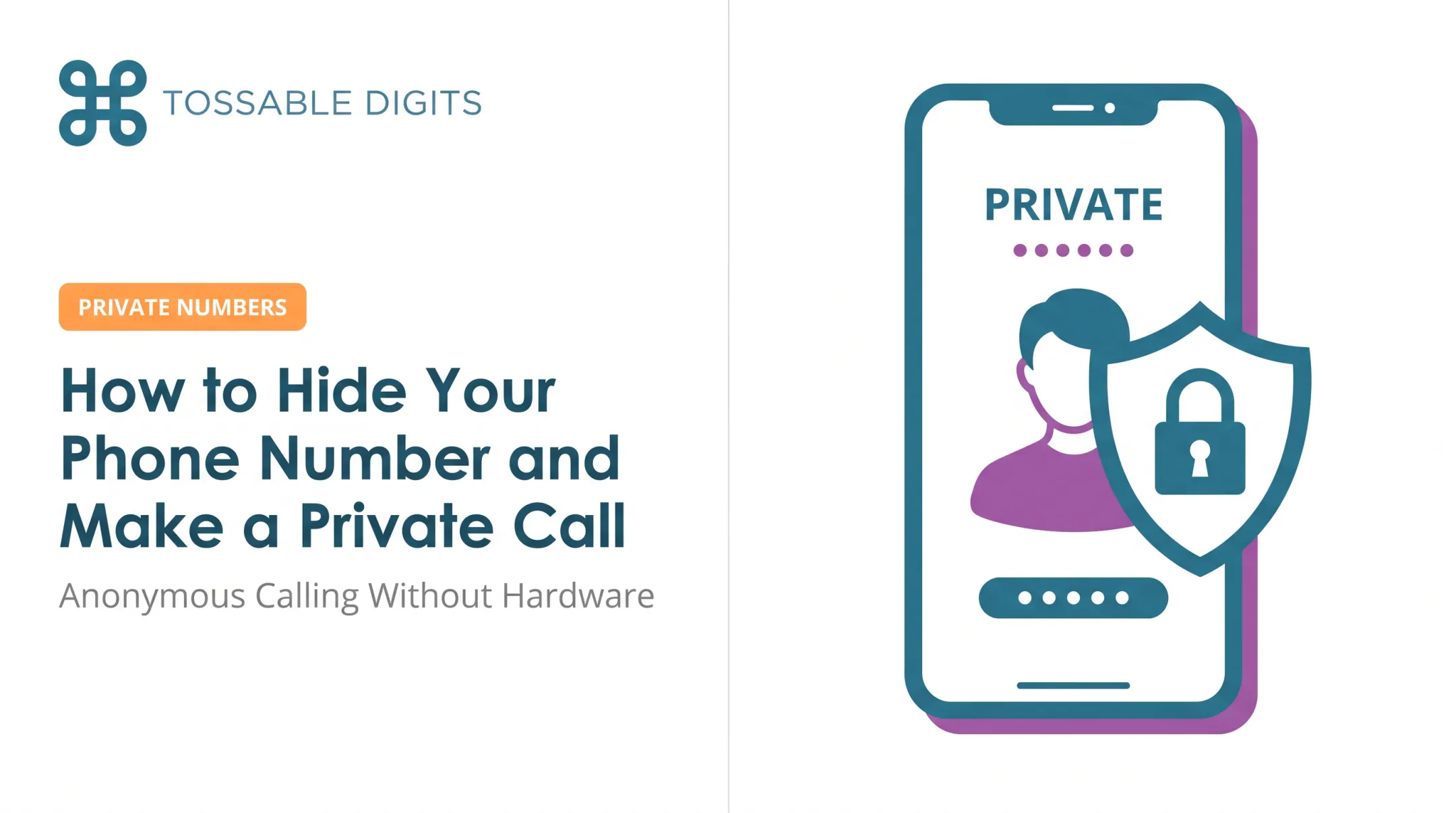

Call masking (also called phone number masking or number masking) shows a virtual or proxy number instead of your real one, while routing calls to you. This guide covers how it works, who benefits, how it differs from caller ID blocking and spoofing, and how to pick a US solution you can trust.
Key Takeaways
- Call masking lets two parties talk without automatically exchanging real numbers.
- A virtual number can still support callbacks, voicemail, forwarding, and sometimes SMS.
- Sellers, landlords, agents, and remote workers gain the most from separating work and personal calls.
- Masking is not spoofing and not full anonymity; consent and telecom rules still apply.
What Is Call Masking and How Does It Work?
What call masking means
Call masking is a service that displays an alternate number, sometimes called a proxy number or cloaked number, to the recipient while connecting the call to the real person. Twilio describes its Proxy product as one-to-one masked communications that pair two participants through a temporary number.
Both sides benefit. A representative keeps a personal mobile private, and a customer, tenant, or buyer doesn't hand theirs over directly.
Masking has limits, though:
- It protects the number, not the person's identity.
- It doesn't stop anyone from volunteering personal details on the call.
- The provider still sees the call.
How a masked call is routed
A typical flow looks like this:
- A caller dials through an app, web interface, phone system, or business workflow.
- The platform selects or assigns a masking number.
- It bridges the two parties.
- Each person sees only the configured masked number.

In Vonage's documented example, a participant calls a virtual number, and the Voice API connects it to the other party's real number. Providers like Twilio draw masked numbers from a pool and reuse them only where conversations won't merge.
Lifespan varies. Twilio sessions can expire after a set time-to-live, while Vonage's example revokes temporary numbers when the call ends. Callbacks work only if the platform maps the masked number back to the right person, so ask what happens when a number expires or the original agent is unavailable.
SMS, voicemail, recording, number pools, and multi-agent routing differ by provider. Vonage's masking example, for instance, requires separate setup for private SMS. Verify each feature instead of assuming it exists.
Benefits and Practical Use Cases
Protecting personal and professional privacy
Teachers, contractors, landlords, agents, and remote workers can all use a separate number without handing out a personal mobile. The boundary is practical: route after-hours calls to voicemail, send certain callers elsewhere, or retire the number without changing your own.
Customers benefit when fewer businesses store their personal numbers.
Improving trust and communication
A consistent business number looks more professional than an employee's cell. Unknown numbers hurt pickup rates: Hiya's 2026 report found 86% of surveyed consumers don't answer unknown numbers. That figure covers six countries, not just the US, and does not prove masking raises answer rates. A stable business caller ID is still easier for customers to recognize and save.
Local, toll-free, or branded numbers should accurately represent your business. Never use them to mislead.
Practical use cases
- Online sellers: Craigslist advises using its mail relay and not giving out personal information. A separate number keeps buyer chats away from your real line.
- Real estate and rentals: Prospects, owners, and vendors reach you without your personal number. One Tossable Digits customer in Louisville, Kentucky, uses two numbers with tenants to identify callers while keeping a real number private.
- Educators and small businesses: Use virtual numbers for appointment inquiries, support, or temporary projects.
- Travelers and expats: A virtual US number with forwarding gives contacts a consistent number abroad, subject to provider availability and calling rules.
Example: A customer calls a business's masked number and reaches the agent. The agent calls back through the same route, so the customer only ever sees that number. When the interaction ends and the number is retired, the customer can no longer reach the intermediary line.

Call Masking vs. Related Phone Features
Call masking is easy to confuse with nearby phone features. Here’s how they differ:
- Virtual number: Often a long-term business identity. Masking hides the underlying numbers for a single interaction. Providers use the terms differently.
- Caller ID blocking: Shows "Private" or "Unknown." Masking shows a real, callable number people trust more and can return.
- Spoofing: The FCC defines spoofing as deliberately falsifying caller ID to disguise identity. Prohibited spoofing involves intent to defraud, cause harm, or wrongfully obtain value. Masking via an authorized intermediary is a different mechanism.
- *69 and *82: Carrier feature codes, not masking services. Verizon notes *69 may announce the last caller only if the network provides it and it wasn’t blocked; *82 unblocks caller ID on some landlines. Support varies by carrier, device, and plan.
How to Choose and Set Up a Call-Masking Solution
What to evaluate before choosing a provider
Start with your workflow: one-off privacy, marketplace listings, employee-to-customer calls, ad tracking, or multi-number operations. Then compare:
- Two-way callbacks, SMS, voicemail, forwarding, and mobile access
- Number expiration and multiple identities
- Authentication, permissions, call-log handling, and retention (compare records and recordings separately; Vonage says it keeps call data for 30 days)
- US number availability, call quality, portability, pricing clarity, and cancellation terms
- 911 limits: the FCC warns VoIP 911 calls may route incorrectly or fail during outages
Basic setup process
- Get a virtual number and decide where calls land: a phone, team, voicemail box, or app.
- Configure routing and outbound caller ID so the other party sees only the masked number. Set rules for business hours, missed calls, callbacks, and expiration.
- Test both directions: outbound call, callback, SMS if needed, and voicemail. Confirm no one sees a personal number.
- Review logs and permissions, then train users not to reveal personal details by voice, text signature, or off-platform callbacks.
Where Tossable Digits fits
Tossable Digits, run by Telusion, Inc. since 2005, is one provider to evaluate. Its virtual numbers forward calls and texts to any existing phone, and outbound calls can show the virtual number as caller ID. Callers don't see your real number.
Features include:
- Local numbers in 500+ US cities, plus toll-free and international options
- Voicemail-to-email with MP3 attachments, SMS delivered by email, and a mobile app
- Number groups, call rules, and robocall blocking
- Two-factor authentication
- Call recording with an automated verbal announcement
- No contract; keep a number for 2 minutes or 10 years
- Business SMS on toll-free numbers only; local numbers are limited to person-to-person texting
It works as a virtual number and forwarding service rather than a proxy-pool API with per-session expiry, so confirm it fits your masking workflow before committing.
Privacy, Legal, and Common Mistakes
Legal basics
No single rule applies nationwide. Research federal and state rules on caller ID, telemarketing, recording, and consent, and get legal review for regulated or high-volume use.
- The TCPA covers certain autodialed or prerecorded calls; a masked number doesn't establish consent.
- Under FCC rules, the Do Not Call Registry applies to interstate and intrastate telemarketing, with exceptions.
- The Reporters Committee says about 11 states primarily require all-party recording consent.

What masking doesn't hide
Providers still hold call metadata, account details, recordings, and SMS content. Review retention, access, deletion, and security policies first.
Common mistakes
- Reusing one number for unrelated purposes
- Skipping expiration rules
- Assuming every number supports all SMS or emergency calling
- Failing to test callbacks
- Leaking a personal number in voicemail greetings or texts
- Using masking to mislead or harass
Then track missed calls, callback completion, message delivery, and privacy incidents to see whether your setup works.
Conclusion
Call masking is a controlled communication layer. People connect while their personal numbers stay out of circulation.
Strong setups share a few traits:
- Clear purpose for each masked number
- Reliable two-way routing
- Sensible number lifecycles
- Privacy controls and honest caller identity
- US compliance
Next, map your call flow, list which numbers must stay private, and test a provider's masking and callback behavior before going public.
Frequently Asked Questions
What does masking your number mean?
It means a virtual or proxy number appears instead of your real one. Calls still reach you, but masking doesn't guarantee complete anonymity.
Does *69 tell you who called?
Not always. It generally returns or announces the most recent incoming call on participating carriers, and it can't reveal a number the network withholds or the caller blocked.
What does *82 do to your phone?
On services that support it, *82 unblocks caller ID for a call when your number is normally blocked. Behavior and availability vary by carrier and plan.
Is call masking the same as caller ID spoofing?
No. Masking routes calls through an authorized intermediary number. Spoofing falsifies caller ID and is unlawful when meant to defraud, harm, or wrongfully obtain value.
Is call masking legal in the US?
Privacy-focused masking is generally different from deceptive caller ID manipulation. Still, check current federal and state rules on caller ID, telemarketing, recording, and consent.
How can a small business mask its phone number?
Use a virtual phone provider with routing, two-way callbacks, privacy controls, and suitable US numbers. Test the full call flow before public use.