Introduction
Picture this: You've given your personal phone number to an Airbnb host, an online marketplace seller, three job boards, a dating app, and that HVAC contractor who quoted your furnace repair. By Tuesday, your phone's buzzing every 20 minutes with spam calls, warranty scam robocalls, and a client who thinks 10 p.m. is a perfectly reasonable time to discuss project revisions. If this scenario feels all too familiar, you're experiencing firsthand why millions of people now rely on a secondary phone number.
The core problem is straightforward: most of us hand out one personal number for everything — business contacts, service signups, online purchases, social platforms — then wonder why the spam never stops or why work follows us into the evening. A secondary phone number fixes this by keeping your real number private and putting you back in charge of who can reach you.
This guide covers what you need to decide: what a secondary phone number is, who needs one, the key benefits, the different types available, and how to get one set up in minutes.
Key Takeaways
- A secondary phone number is an additional line that works on your existing phone—no second device needed
- Protects your privacy by shielding your personal number from spam, data breaches, and unwanted contact
- Keeps work and personal calls separate—with dedicated voicemail and call rules on a single device
- Costs a few dollars monthly vs. hundreds for a second phone or carrier plan
- Available as virtual numbers (virtual phone-based), carrier add-on lines (dual SIM/eSIM), or physical second devices
What Is a Secondary Phone Number?
A secondary phone number is any additional phone number you use alongside your primary number, capable of making and receiving calls and texts without requiring a separate physical device. It functions exactly like a regular phone line—complete with voicemail, SMS, and caller ID—but remains independently identified to callers.
Primary vs. Secondary: What's the Difference?
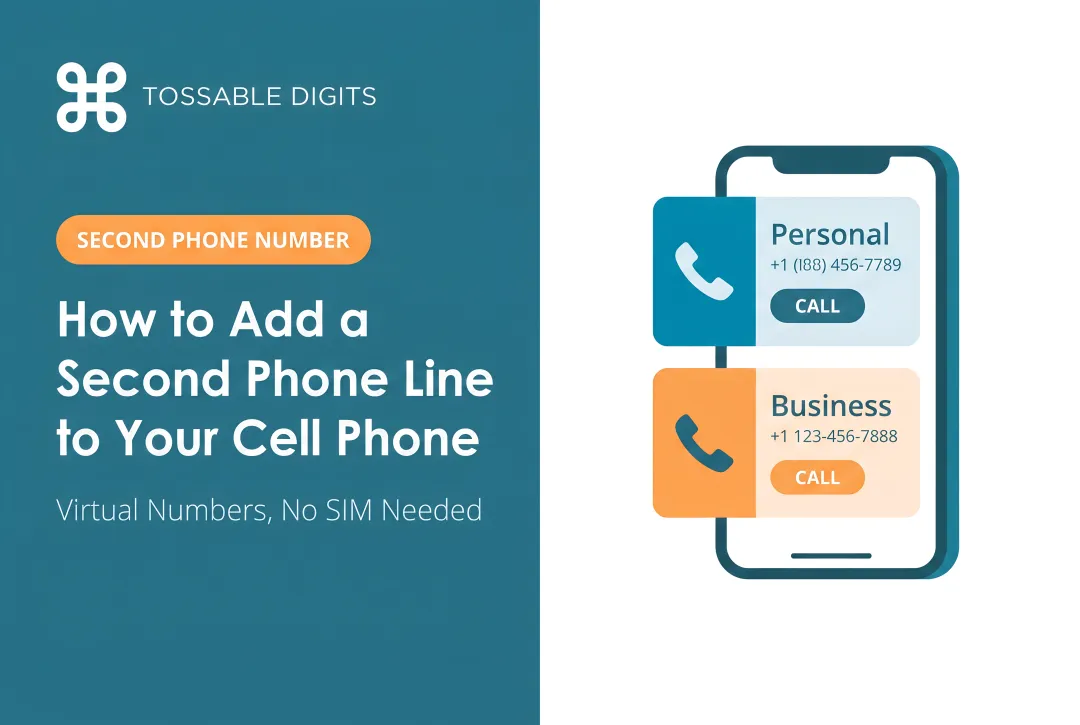
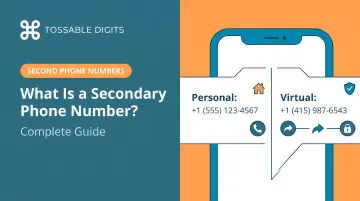
Your primary number is tied directly to your main SIM card or carrier account and linked to your personal identity—it's the number your bank, family, and close contacts use. A secondary number is an additional line—often virtual—that rings to the same device but appears as a completely separate number to anyone calling or texting you.
This separation is the key to the secondary number's utility: callers see only the secondary number, never your primary line, which remains protected from exposure. Understanding that separation raises a natural question: how does the routing actually work?
How Virtual Secondary Numbers Work Technically
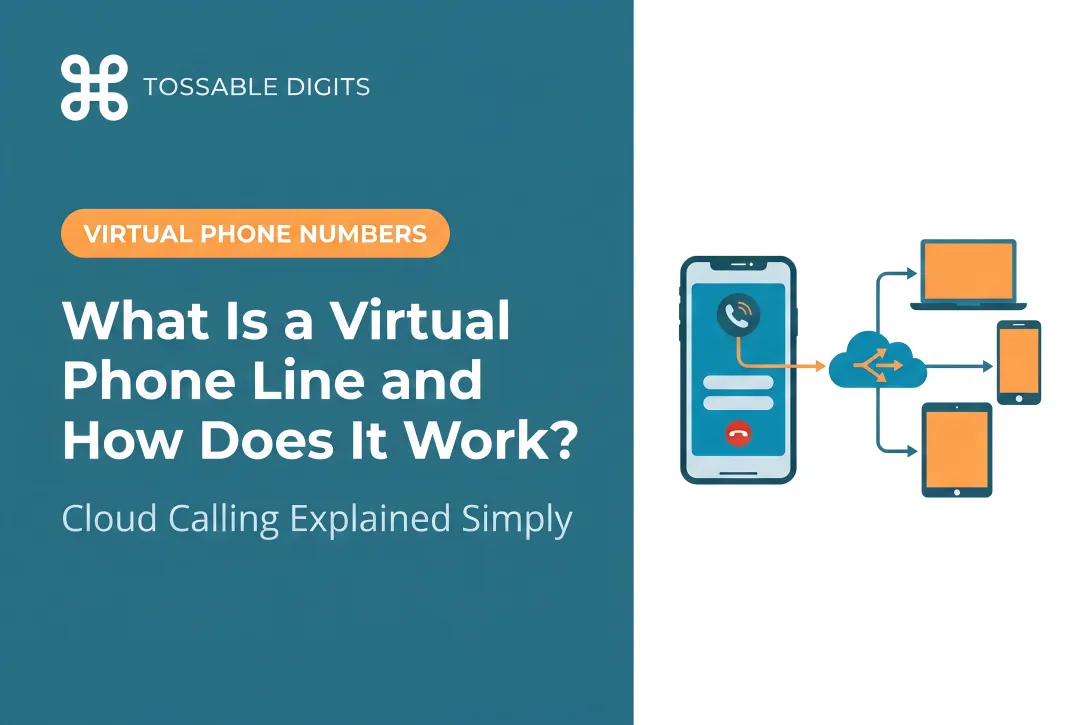
Most secondary numbers today operate through virtual phone (Voice over Internet Protocol) or virtual number services. When someone calls your secondary number, the call is routed through the provider's network and forwarded to your existing phone via the internet or your carrier connection. To the caller, it appears as a distinct, dedicated line—they have no idea it's forwarding to your personal device.
This routing happens automatically, whether you're using Wi-Fi, cellular data, or a combination of both.
What Can a Secondary Number Do?
A secondary phone number delivers full phone functionality:
- Make and receive calls with your business or privacy number displayed on caller ID
- Send and receive SMS messages to a dedicated inbox
- Access voicemail with custom greetings
- Enable call forwarding to any phone worldwide
- Support call recording, call screening, and IVR auto-attendant menus
In short, you get a fully functional phone line—without carrying a second device.
Clearing Up a Common Misconception
A secondary phone number is not the same as a "burner phone" or disposable number—though it can be used that way if needed. Many people maintain secondary numbers permanently, using them as dedicated business lines, travel numbers while abroad, or long-term privacy layers with custom voicemail and call rules. You can keep a secondary number for years or discard it after a single use; the flexibility is entirely yours.
Who Needs a Secondary Phone Number?
Business Owners, Freelancers, and Side Hustlers
If you run a business or freelance, a dedicated second number creates instant professional credibility without the cost of a full business phone system. You can set clear boundaries right away:
- Direct after-hours calls to voicemail automatically
- Keep client inquiries from interrupting personal time
- Maintain a separate line clients recognize as your business number
That separation is what makes solo operators look established from day one.
Privacy-Conscious Individuals Using Online Platforms
Every time you share your real number on Craigslist, Facebook Marketplace, dating apps, or website signup forms, you expose yourself to spam, data harvesting, and unwanted contact from strangers. The U.S. saw a record 3,322 data compromises in 2025, a 79% jump over five years, and many of these breaches involve phone numbers sold to telemarketers and scammers.
A secondary number shields your primary line entirely. If the number gets compromised or attracts spam, you simply discard it and get a new one—your real number remains untouched.
Professionals with Client-Facing Roles
Real estate agents, teachers, healthcare workers, and property managers often need clients to reach them but can't afford to have their personal numbers widely circulated. According to the 2024 NAR Member Safety Commercial Report, 30% of commercial real estate members felt unsafe after receiving threatening or inappropriate calls or texts.
For these professionals, a secondary number creates a critical safety buffer: clients have a reliable way to reach you, but your personal number—and by extension, your off-hours peace and physical safety—remains protected.
Travelers and International Users
If you travel abroad frequently or live overseas as an expat, a secondary virtual US number allows you to maintain a local US presence without expensive international roaming fees. Major carriers charge $12/day for international roaming, which adds up fast on extended trips.
A virtual secondary number works over Wi-Fi or local data, letting you receive calls at no extra cost and stay reachable to US contacts without paying roaming premiums or missing important calls.
Marketers and Advertisers Tracking Campaigns
Businesses use different secondary numbers for different advertising channels — one for Google Ads, another for Facebook, a third for print — to measure which sources generate inbound calls. Phone calls convert to revenue 10-15x more often than web leads, making call tracking a high-value strategy.
Tossable Digits supports this directly: marketers can assign distinct virtual numbers to each campaign and track which ads drive the most calls, making it easier to cut underperforming spend and double down on what works.
Key Benefits of Having a Secondary Phone Number
Privacy and Identity Protection
When you give out a secondary number instead of your primary line, you limit the personal data exposure tied to your main number—a critical defense given the frequency of data breaches. IBM's 2025 Cost of a Data Breach Report notes the global average cost of a data breach is $4.44 million, with nearly half involving customer personally identifiable information, including phone numbers.
U.S. consumers received 52.5 billion robocalls in 2025, a number that's held steady between 50 and 55 billion annually. By using a secondary number for online signups and marketplace transactions, your primary number stays off spam lists and data broker databases entirely.
Work-Life Balance and Boundary Setting
A secondary number enables you to genuinely disconnect after hours. Calls to your business number go to voicemail while your personal line remains unaffected, giving you control over when work can reach you.
This separation reduces stress and improves productivity. Research shows that the mere expectation of after-hours email availability causes exhaustion, even when employees don't actually work. A dedicated business number removes that pressure entirely — calls come in only when you choose to be reachable, not whenever a client decides to dial.
Better Call Management and Organization
Many virtual secondary numbers include professional features that go well beyond basic call forwarding:
- Voicemail-to-email: Messages delivered as MP3 attachments directly to your inbox
- Call recording: Useful for training, dispute resolution, and compliance
- IVR auto-attendant: Route callers with prompts like "Press 1 for Sales, Press 2 for Support"
- Call screening: Know who's calling before you pick up
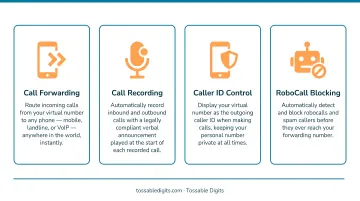
These tools let you manage communications professionally without investing in expensive phone systems or IT infrastructure.
For example, Tossable Digits includes unlimited voicemail, call recording, IVR, call screening, and RoboCall Blocking in every plan, bundled at a flat monthly rate with no contracts.
Cost Savings Over Maintaining a Second Physical Device
Compare the cost of a virtual secondary number service (typically a few dollars per month) against buying and maintaining a second smartphone. An entry-level iPhone starts at $599, plus a monthly carrier plan. Even carrier-based second-line add-ons cost $10-$15/month and require a dual-SIM-capable phone.
A virtual number eliminates hardware costs entirely, working on your existing device while delivering the same functionality—and often more features—for a few dollars a month.
Types of Secondary Phone Numbers
Virtual Phone Numbers (virtual phone-Based)
Virtual phone numbers are the most flexible and affordable option. These numbers are hosted by a virtual phone provider, accessible via mobile app or web dashboard, and work over Wi-Fi or cellular data. They're available in local, toll-free, and international formats, giving you maximum choice.
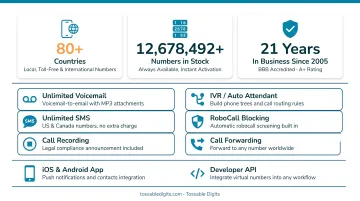
Tossable Digits operates in this category, with numbers available in local, toll-free (800, 888, 877, 866, 855), and international formats from 84 countries. Every plan includes:
- Unlimited SMS and voicemail
- Call recording and IVR auto-attendant
- RoboCall Blocking and CallerID control
- All 60+ features, no contracts required
- Mobile app for iOS and Android
Carrier-Based Second Line (Dual SIM / eSIM Add-On)
Major carriers like Verizon and T-Mobile offer second-number plans that run on your device's eSIM for $10-$15/month. These use the same data plan as your primary line and require a dual-SIM-capable phone (iPhone XS/XR or later, Samsung Galaxy S20 or newer, Google Pixel 3a or later).
This works if you prefer keeping everything through your carrier — but expect fewer features and higher monthly costs compared to a virtual number service.
Physical Second Device
Some people carry two separate phones with separate SIM cards—one for business, one for personal use. While this offers complete separation, it's the least practical and most expensive approach: you're paying for a second device ($599+ for an entry-level smartphone) plus a full carrier plan.
Virtual numbers give you the same separation without the extra hardware or the second monthly bill.
How to Get a Secondary Phone Number
Determine Your Needs Before Choosing a Provider
Before selecting a service, consider:
- Area code: Local numbers build regional credibility; toll-free signals a national presence; international numbers suit frequent travelers.
- SMS and voicemail: Most virtual providers include both — confirm before signing up, since some charge extra.
- Call recording and IVR: If you're running a business, these let you screen calls, record conversations, and manage high call volumes professionally.
- Contract flexibility: Month-to-month plans let you cancel or switch without penalties if your needs change.
Getting a Virtual Secondary Number Step by Step
The general process is straightforward:
- Choose a provider based on features, pricing, and geographic coverage.
- Select a number (local, toll-free, or international) from the available inventory.
- Set up call forwarding to your existing phone—calls and texts route automatically.
- Configure voicemail and features like custom greetings, IVR menus, or call screening.
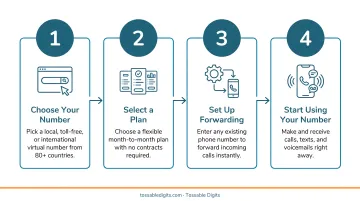
Tossable Digits completes this setup in minutes, with unlimited SMS, call recording, voicemail-to-email, and RoboCall Blocking included on every plan — no contract required.
Getting a Carrier-Based Second Number
Virtual providers aren't the only route. If you'd rather keep everything under one account, your existing carrier may support a second number directly.
To add a second number through your carrier:
- Verify your phone supports dual SIM (physical SIM + eSIM).
- Log into your carrier account portal (Verizon, T-Mobile, AT&T).
- Add a second-number plan to your account (typically $10-$15/month).
- Activate the eSIM and configure which number handles calls, texts, and data.
This option requires device compatibility and adds to your monthly carrier bill, but it keeps everything under one provider if that's your preference.
Frequently Asked Questions
What does a secondary phone number mean?
A secondary phone number is simply an additional phone number used alongside your primary number, allowing you to make and receive calls and texts from a different number—often without needing a second device.
What is the difference between primary and secondary phone numbers?
The primary number is your main number tied to your SIM card and carrier account, while a secondary number is an additional number—often virtual—used for a specific purpose like business or privacy. Both can work on the same phone.
Why would someone need a second phone number?
Common reasons include separating personal and professional communications, protecting privacy when using online platforms or dating apps, traveling internationally without roaming fees, or managing advertising campaigns to track which channels drive calls.
Is a free second phone number really free?
Some services offer free plans with limitations like ads, usage requirements, or virtual phone-only calling. Google Voice reclaims free numbers after 90 days of inactivity, and free accounts don't support 911 emergency calling. Paid virtual number services offer more reliable features and better number retention—"free" nearly always comes with trade-offs.
Can I use a secondary phone number on my existing phone without buying a new device?
Yes. A virtual secondary number works on any existing smartphone via a mobile app or call forwarding, and a carrier-based second number works on any dual-SIM-capable phone—no second device needed in either case.
Is a secondary phone number private?
A secondary virtual number hides your primary number from callers and shields it from spam databases and data breaches. That said, CALEA requires interconnected virtual phone providers to accommodate lawful wiretaps. Privacy is strong, but not absolute—authorities can access records with proper legal authorization.
Ready to protect your privacy and take control of your communications? Tossable Digits offers virtual phone numbers with all features included, no contracts, and setup in minutes. Visit Tossable Digits and pick your number in minutes.