Introduction
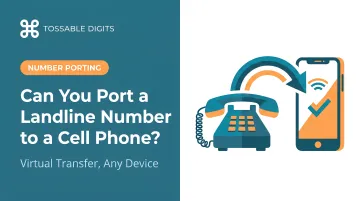
You've had your landline number for years — it's printed on business cards, memorized by family members, and tied to your professional identity. Now you're ready to cut the cord, but losing that number isn't an option. The good news? Yes, in most cases you can port a landline number to a cell phone.
The process — called number porting — is governed by FCC rules that protect your right to keep your number when switching providers. This guide covers what porting is, how to do it step by step, how it compares to call forwarding, what to do if porting isn't an option, and the most common mistakes to avoid.
Key Takeaways
- Yes, you can port most landline numbers to a cell phone — the FCC's Local Number Portability (LNP) rules give you the legal right to do so
- The process takes 3–10 business days and requires your account number, PIN, and billing address from your current landline provider
- Never cancel your landline service before the port is complete — doing so will permanently lose the number
- Call forwarding routes landline calls to your cell temporarily, but doesn't transfer the number permanently
- If your number can't be ported, a virtual phone number can forward calls to any device without requiring a port
What Is Landline Number Porting?
Number porting is the process of transferring an existing phone number from one carrier or line type to another — in this case, from a traditional landline provider to a mobile carrier — so that the same number rings on a new device or service.
Legal Framework That Makes Porting Possible
The FCC's Local Number Portability (LNP) rules require providers to release a customer's number upon request. Carriers cannot refuse a valid port-out even if the account has an outstanding balance or early termination fee. This protection applies across wireline, wireless, and IP-based providers — meaning you retain ownership of your number no matter which service type you move to.
That distinction matters when choosing how to handle your number long-term.
Porting vs. Call Forwarding
These two options serve different purposes:
- Porting permanently moves the number and cancels the old service, transferring both the number and administrative ownership to the new carrier
- Call forwarding redirects incoming calls to another number without transferring ownership or closing the landline account
The FCC classifies call forwarding as a "transitional number portability measure" rather than true long-term portability — useful as a stopgap while a port is in progress, but not a substitute for it.
How to Port Your Landline Number to a Cell Phone
Critical Prerequisite: Keep Your Landline Active
Do not cancel your landline service before starting the port. The number must remain active with the original provider throughout the entire porting process. Your new mobile carrier needs to initiate the transfer while the account is live — canceling early could mean losing the number permanently, as inactive numbers cannot be ported.
Gather Required Account Information
Before contacting your new carrier, collect these exact details from your landline bill:
- Full 10-digit phone number
- Account holder's name (exactly as it appears on the bill)
- Service address and billing ZIP code
- Account number
- Account PIN or security password (if applicable)
Even minor mismatches — such as "Bill" vs. "William" or an incorrect ZIP code — can cause the port request to be rejected.
Step 1: Contact Your New Mobile Carrier
Initiate the port by signing up with a new mobile carrier and specifically requesting to port in your existing number. You can typically do this:
- Online through the carrier's website
- In-store at a retail location
- By phone with customer service
Expect email or text updates as the transfer progresses.
Step 2: Submit Your Landline Account Information
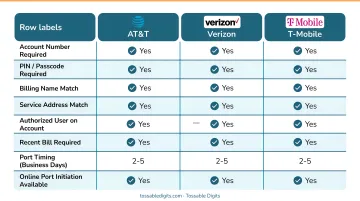
Your new carrier uses those account details to formally request the number release from your old provider. According to FCC regulations, carriers require specific standard data fields including your account number, billing ZIP code, and transfer PIN to process the port request.
Common submission requirements by carrier:
| Carrier | Required Information | Transfer PIN Required? | Stated Timeline |
|---|---|---|---|
| AT&T | Phone number, account holder name, billing address, SSN/Tax ID, account number, PIN/password | Yes (if applicable) | 5-7 business days |
| Verizon | Phone number, account number, Number Transfer PIN, security code | Yes | 2-10 business days |
| T-Mobile | Phone number, current provider name, account number, billing address/ZIP, transfer PIN/password | Yes | 3-10 business days |
Step 3: Wait for Confirmation and Test
The typical processing timeline differs significantly from mobile-to-mobile ports:
- Mobile-to-mobile ports: Can complete within hours
- Landline-to-mobile ports: Typically take 3–10 business days
This extended timeline exists because landline and cellular networks run on different underlying technologies. The Number Portability Administration Center (NPAC) must coordinate between two separate systems, and wireline ports operate on longer processing intervals than wireless transfers.
Once your new carrier confirms the port is complete, call your old landline number. It should ring on your cell phone.
Porting vs. Call Forwarding: Which Option Is Right for You?
You have two routes when you want landline calls on your mobile: permanent porting (moves the number, ends landline service) or call forwarding (keeps the landline active, redirects calls). Your choice depends on your long-term intent.
How Call Forwarding Works
Most landline providers support unconditional call forwarding using star codes:
- Activate forwarding: Dial *72 followed by the 10-digit cell number
- Deactivate forwarding: Dial *73
These North American Numbering Plan standard codes work across AT&T, Verizon, Frontier, and most major carriers. Some providers also offer forwarding management through online account portals for more granular rules, such as forwarding only when busy or unanswered.
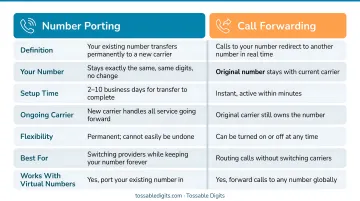
Side-by-Side Comparison
| Number Porting | Call Forwarding | |
|---|---|---|
| What it does | Permanently transfers the number to your cell phone | Keeps the landline active and redirects calls |
| Landline bill | Eliminated entirely | You pay for both services |
| Setup time | 3–10 business days | Minutes, using star codes |
| Best for | Cutting the cord permanently | Temporary needs, hybrid use, or testing before committing |
Before initiating a port, call your current provider to check for pricing impact. If your landline is bundled with internet or TV service, porting cancels the phone component — which frequently triggers the loss of promotional discounts. Per Verizon's Fios Customer Agreement, remaining services may automatically revert to non-discounted standard rates.
When Porting Isn't Possible — And What to Do Instead
Geographic Restrictions
Landline numbers are tied to specific NANPA-defined "rate centers" — geographic areas containing one or more wire centers. Porting from a wireline carrier to a wireless carrier is only required where the requesting wireless carrier's coverage area overlaps the geographic location in which your landline number is provisioned.
If you're moving to a different geographic area, your number may not be portable to that region.
Rural Carrier Exemptions
Under 47 U.S.C. § 251(f)(2), small rural carriers with fewer than 2% of the nation's subscriber lines may petition state public utility commissions for waivers exempting them from LNP requirements. If your landline belongs to a rural carrier that has obtained such a waiver, porting may not be available.
Other Complicating Scenarios
Number porting may also be blocked or complicated by:
- Government-assigned or institutional numbers
- Accounts with complex billing arrangements
- Numbers tied to older infrastructure that predates LNP compliance
- N11 codes (911, 411, 211) which cannot be ported
Virtual Phone Numbers as an Alternative
When porting isn't an option, a virtual phone number is often the most practical workaround. Tossable Digits lets you get a new number — local, toll-free, or in a chosen area code — that forwards calls to any mobile device globally.
Key advantages:
- No porting required; most numbers activate within minutes
- Forward calls to any phone, anywhere in the world
- No contracts — cancel anytime
- Manage everything from the app or web dashboard
- All plans include voicemail-to-email, SMS reception, call recording, IVR auto-attendant, and robocall blocking
This is especially useful for small business owners, real estate professionals, or anyone who needs a dedicated business line on their cell without giving out their personal number. Virtual numbers from Tossable Digits are available in 500+ US cities, all 50 states, throughout Canada, and in 80+ countries worldwide, with most numbers activating immediately.
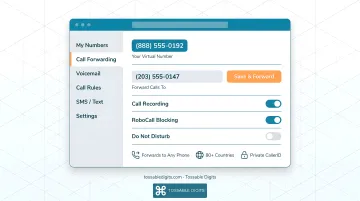
If you need to keep your landline number active during a transition, you can run both simultaneously — forwarding through a virtual number while you decide whether a full port makes sense.
Common Mistakes and Misconceptions About Number Porting
Canceling the Landline Too Early
Canceling your landline before the port is complete will kill the transfer entirely. This immediately terminates the number, and it cannot be recovered. A phone number must be active with the previous service provider for a port to be successful. If the losing provider finds the number is disconnected or has a pending disconnection order, they will reject the port.
The only safeguard: wait for written confirmation from your new carrier that the port has been finalized before canceling anything.
Expecting Same-Day Completion
Many people assume landline ports happen as quickly as mobile-to-mobile switches. They don't. Because landline and cellular networks run on different underlying technologies, the transfer requires coordination between two different systems and may take much longer.
Plan accordingly — budget for the full 3-10 business day window, not a same-day turnaround.
Submitting Inaccurate Account Information
Many port rejections are caused by data mismatches — submitting account details that don't precisely match what the landline provider has on file. Common errors include:
- Name spelling differences ("William" on the account vs. "Bill" on the port request)
- Incorrect billing address or ZIP code
- Wrong account number or missing digits
- Incorrect or missing transfer PIN
Pull a physical or digital bill and verify every field rather than entering information from memory. Before submitting anything, request a Customer Service Record (CSR) from your current carrier. It contains the exact technical and billing details required — and removes the guesswork entirely.
Frequently Asked Questions
Can I port a landline number to a cell phone?
Yes, in most cases you can. FCC Local Number Portability rules require carriers to allow customers to transfer their number when switching providers, including between wireline and wireless services, as long as the number stays within the same geographic service area.
What phone numbers cannot be ported?
Three categories are generally exempt from porting:
- Numbers tied to a different geographic region than your new service area
- Numbers held by rural carriers with state-granted porting waivers
- Government or institutional numbers not subject to standard LNP rules
How long does it take to port a phone number from a landline?
Simple mobile-to-mobile ports can complete in hours. Landline-to-mobile ports, however, typically take 3 to 10 business days due to the technical differences between wireline and cellular networks and the coordination required between carriers.
How do I get rid of my landline but keep the number?
Initiate a port request with your new mobile carrier before canceling the landline. The new carrier handles the transfer and cancels the old service automatically once the port completes — your number is preserved throughout the process.
Can I divert landline to mobile for free?
Basic call forwarding using star codes (typically *72) is often included in standard landline plans at no extra charge, though some providers charge a monthly feature fee — check with yours to confirm. Keep in mind that call forwarding keeps the landline active and doesn't transfer the number permanently.