
Introduction
Your phone rings. The screen shows 1-888 and a string of digits you don't recognize. Is it a scam? A pharmacy? A delivery update? Many people search "888 area code" for exactly this reason.
Here is the short answer: 888 isn't a geographic area code. It's a toll-free prefix, and it can't tell you where a call came from or who is really calling.
This guide covers both sides. First, how to judge an unexpected 888 call and report the bad ones. Then, how individuals and businesses can get an 888 number for privacy, accessibility, and call management.
Key Takeaways
- 888 is a non-geographic toll-free code used across the North American numbering system.
- Callers usually skip long-distance charges; the number's subscriber pays the provider.
- An 888 prefix is legitimate, but caller ID can be spoofed.
- Businesses can route 888 numbers to existing phones, with voicemail, IVR, and recording.
What Is an 888 Number?
888 is a toll-free prefix, not a geographic area code
A toll-free number is written 1-888-XXX-XXXX: a leading 1, a three-digit code, then seven digits. NANPA classifies toll-free codes as non-geographic special-service codes, unlike a city code such as 415.
Technically 888 sits in the area code position, but it points to no place.
The FCC's 1996 order set 888 service to begin March 1, 1996, as functionally equivalent to 800. An 888 number reveals nothing about where a business sits, which suits organizations serving customers nationwide.
How toll-free call routing works
A caller dials the number. Their network looks up routing instructions in the toll-free database, then hands the call to the subscriber's chosen destination. Subscribers manage this through a Responsible Organization (RespOrg), which reserves numbers and maintains their records.
A virtual 888 number can ring an existing mobile phone, landline, or app. No separate physical line is needed at your premises.

Who pays for an 888 call?
The FCC says the called party, the toll-free subscriber, pays rather than the caller. A business may face recurring fees, per-minute usage, messaging, setup, or feature charges.
A few exceptions apply for callers:
- Landline callers pay no long-distance charge; wireless callers may still use airtime unless the plan is unlimited
- Payphone calls may carry special compensation charges that can be passed on to the caller
- Calls from outside the US aren't guaranteed to connect or be free; standard Tossable Digits toll-free numbers don't work from payphones, Canada, or outside the US (compatible options available on request)
A valid prefix doesn't guarantee a legitimate caller
888 is a real toll-free prefix, and a complete 888 number can be perfectly valid. But the prefix can't authenticate who's behind the call. That's why unexpected calls need independent verification, covered next.
Why Is an 888 Number Calling Me, and Is It Safe?
Common legitimate reasons for an 888 call
Plenty of real organizations use toll-free lines:
- Customer service and technical support
- Order updates and billing
- Appointment reminders from healthcare practices
- Sales teams and call centers
- Nonprofit helplines
Ask yourself whether you recently bought something, opened a support ticket, booked an appointment, or changed a subscription. A call that matches recent activity is probably expected. One that doesn't deserves caution.
Why scammers and robocallers use 888 numbers
Toll-free numbers look businesslike and hide geography, which appeals to telemarketers and impersonators. Still, an 888 prefix doesn't make a call fraudulent. And scammers can imitate a real company's number.
The FCC defines spoofing as deliberately falsifying caller ID. Spoofing is not always illegal, but it is prohibited when meant to defraud, cause harm, or wrongfully obtain value. Caller ID alone proves nothing.
The FTC reported more than 1 million imposter-scam reports and $3.5 billion in losses for 2025, though that total isn't specific to 888 or phone calls.
Warning signs of a suspicious call
- Pressure to act immediately
- Threats of arrest or account closure
- Requests for gift cards, wire transfers, or cryptocurrency
- Demands for passwords or one-time verification codes
- Requests for remote access to your computer
- Links sent during the call
Legitimate organizations can be verified through a number on their official website, bill, statement, or account portal. Never use a callback number the caller gives you.
Safe steps for an unexpected call
- Let unknown calls go to voicemail.
- Share nothing sensitive, and hang up if the caller pressures you.
- Contact the organization using an independently verified number.
- Search the full number plus "scam" or "complaint." Online reports are clues, not proof.
How to block and report suspicious calls
Blocking options include:
- Built-in phone tools: iPhone silence for unknown callers, or Google's Phone app spam filters
- Carrier tools such as AT&T ActiveArmor, Verizon Call Filter, and T-Mobile Scam Shield
- Voicemail screening before you call back
The FCC also keeps a call-blocking resource list with more options.
The National Do Not Call Registry is free, but it only tells covered telemarketers not to call. It doesn't block anything, and it won't stop scammers.
For reporting, use DoNotCall.gov for unwanted calls and ReportFraud.ftc.gov if a scam cost you money. The FCC also takes complaints but doesn't resolve individual ones. Keep the number that called, the date and time, what the caller claimed, and any information they requested.

888 vs. 800 and Other Toll-Free Prefixes
How 888 compares with other prefixes
The North American Numbering Plan Administrator (NANPA) lists seven active US toll-free codes: 800, 833, 844, 855, 866, 877, and 888. They belong to the same service category, and the prefix alone doesn't determine call quality or trustworthiness.
They aren't interchangeable, though. Swapping 888 for 800 in a number can reach an entirely different recipient, as the FCC's FAQ notes.
Availability, memorability, and vanity numbers
Businesses can choose a random, patterned, or vanity number if available. A memorable number such as 1-888-BUY-CARS can boost advertising recall when the digits map cleanly to your offer.
Popular 800 combinations may be taken, but availability varies by number and provider. Don't assume 888 numbers are newer, cheaper, or easier to get.
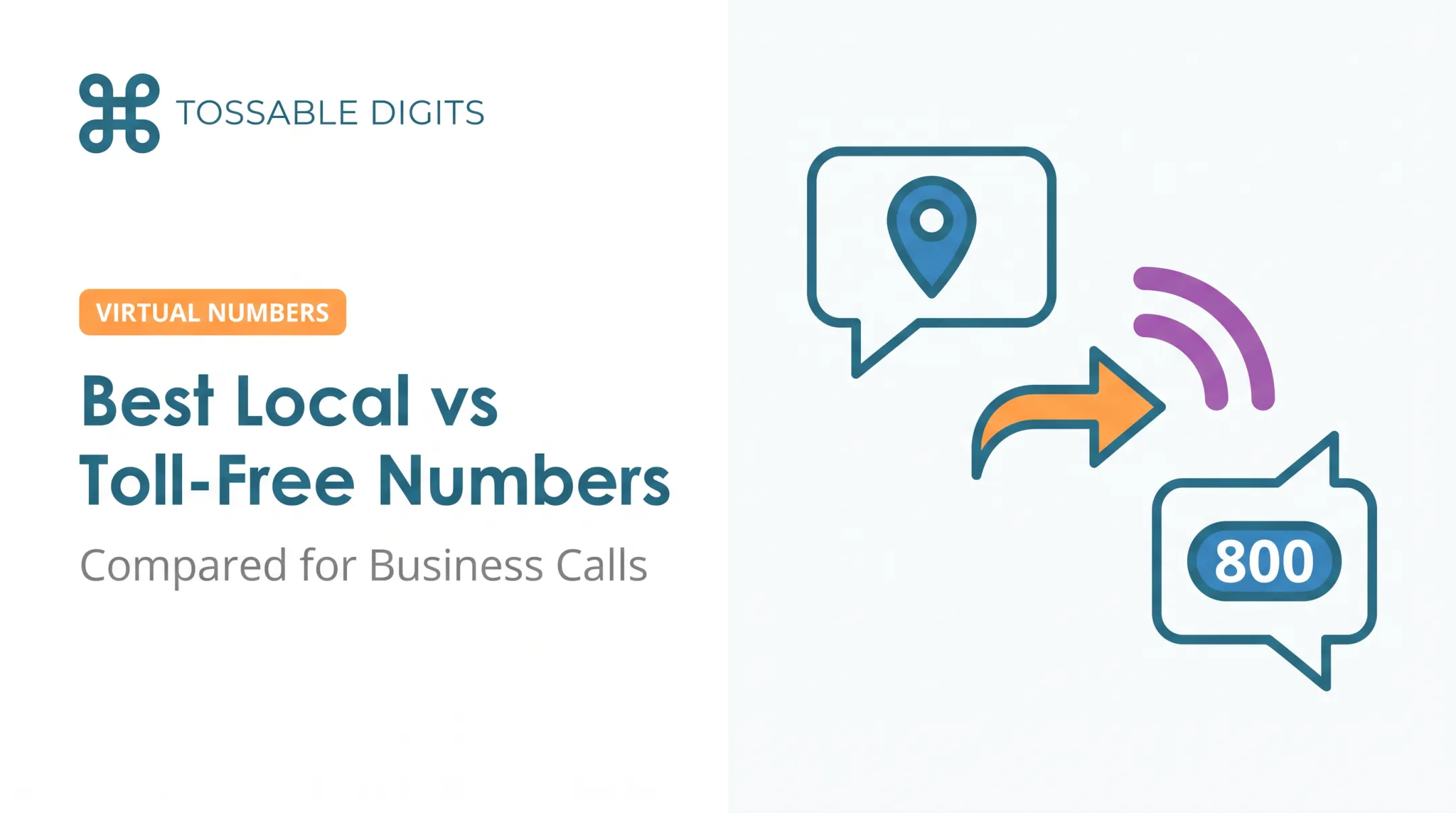
Choosing between toll-free and local
| Choose toll-free when | Choose local when |
|---|---|
| You serve a national or online audience | You want a community or city connection |
| Customers span regions | Your customers are concentrated nearby |
| You want one consistent contact number | A local area code builds trust in your market |
Weigh these factors before you lock in a number:
- Customer geography and brand positioning
- Availability, expected call volume, and routing needs
- Privacy requirements and total cost
Prefix recognition alone shouldn't drive the decision.
Why Businesses Use 888 Toll-Free Phone Numbers
Accessibility and professional customer contact
A toll-free number can remove a perceived cost barrier and give customers one consistent contact point nationwide. It may also read as more established. That's a perception, not a guarantee. Responsive service still shapes the customer experience, and claims that toll-free numbers beat local ones on trust or conversion lack clear support from reputable studies.
Privacy, flexibility, and work-life separation
A virtual 888 number can keep your personal mobile private, separate work from personal calls, support remote workers, and forward to whichever device you're using while traveling.
Privacy is where Tossable Digits started. Its founder, Peter Beckman, built the service to sell a car online without publishing his personal cell number.
Call management and marketing visibility
Useful tools include:
- Voicemail-to-email, with MP3 attachments
- Business-hours routing and IVR menus
- Call recording with proper legal notices
- SMS where supported
- Number groups for managing several lines
Separate numbers help marketers compare campaigns. Google Ads describes forwarding numbers that track call time, duration, campaign, and ad group. One Minneapolis Tossable Digits customer said using different numbers in different ads showed which worked best.
Recording laws vary. Federal law is a one-party-consent baseline, but about 11 states primarily require all-party consent, per RCFP's guide. Check your state.
How to Get and Set Up an 888 Number
Choose a provider and review the full cost
Compare these before committing:
- Monthly charges and included minutes
- Per-minute rates, SMS fees, and taxes
- Setup, porting, and vanity-number fees
- Contract and cancellation terms
- Number portability, billing transparency, support, and spam controls
Costs vary by carrier and plan, so ask for current pricing rather than relying on old benchmarks. The FCC says subscribers can port a toll-free number to a new RespOrg without getting a new number.
Search for an appropriate number
Search random, patterned, and vanity options. Test whether the number is easy to say, hear, type, and remember.
Before you claim it, verify:
- Current availability
- Prior use, if the provider discloses it
- Any advertising or SMS restrictions
The FCC can't check availability for you; a carrier or RespOrg can.
Select destinations and routing rules
Forward to a mobile phone, landline, app, or team member. Then layer on:
- Business hours and holiday schedules
- Simultaneous ringing and overflow routing
- Voicemail and failover destinations
- IVR menus, extensions, and department routing
- Caller ID settings and call logs
Configure messaging, privacy, and recording
Toll-free texting depends on provider support and carrier rules. Per Twilio's guidance, unverified toll-free numbers on its service have been blocked since January 31, 2024. Clear opt-in and opt-out are expected, so confirm requirements before promising business texting.

Use a recording announcement, turn on two-factor authentication, and keep your personal number out of public view.
Test and publish the number
- Place inbound and outbound test calls.
- Check forwarding, voicemail, and after-hours behavior.
- Confirm caller ID and, if enabled, SMS.
- Make sure every intended user has access.
- Publish on your website, email signatures, invoices, listings, social profiles, and ads.
Keep a backup contact method during the transition.
Where Tossable Digits may fit
Tossable Digits is a virtual number service for US individuals and businesses. It offers toll-free numbers, including 888, with privacy and flexible call management. Plans are month-to-month with no contract.
Included features cover:
- Forwarding, voicemail-to-email, and SMS
- Mobile app, IVR, and call recording
- Number groups and API access
Existing US numbers can be ported in at no fee. Check current 888 availability and pricing before signing up. Business SMS is allowed on its US and Canada toll-free numbers, but local-number texting is limited to person-to-person messages.
Frequently Asked Questions
Why is an 888 number calling me?
Often it's a business: customer service, billing, appointment reminders, or support. But spoofed and unwanted calls can also show 888, so verify independently before sharing anything.
Is 888 an area code in the USA?
No. 888 is a non-geographic toll-free code, not tied to any US city or state.
Is 888 a valid phone number?
888 is a valid toll-free prefix inside a complete number. The prefix alone doesn't confirm that a specific caller or organization is legitimate.
Is 88 a country code?
No. The ITU doesn't list +88 as a complete country code; digits that follow matter, such as +880 for Bangladesh. International +888 is a separate code assigned to the UN's OCHA, unrelated to 1-888.
Are 888 numbers toll-free for callers?
Usually, for domestic landline calls. Wireless callers may still use plan minutes, and international calls, payphones, and carrier policies can change the outcome.
How can I get an 888 number for my business?
Pick a provider, search for an available number, and review fees. Then set up routing, test everything, and publish the number across customer-facing channels.